Drought Water Access Fund
Donate crypto to this water & sanitation cause in Ethiopia. We accept Bitcoin, Ethereum, USDT and six other coins, with no platform fee.
Drills and repairs boreholes in regions where consecutive failed rainy seasons have dried up traditional water sources.
Why this matters in Ethiopia
The drought of 2020 to 2023 brought five consecutive failed rainy seasons to southern and southeastern Ethiopia, the worst in decades across the Horn of Africa. Pastoralist families in Somali and Oromia regions lost large numbers of livestock, and the ponds, shallow wells and seasonal rivers they relied on dried up. Women and girls walk long distances for water during droughts, and children miss school to help.
Recovery has been slow because herds take years to rebuild and conflict and climate shocks have overlapped. In the lowlands groundwater is often deep, and drilling there needs proper hydrogeological surveys and heavy rigs that small communities cannot afford. Many existing boreholes have stopped working because of broken pumps, failed generators or a lack of money for maintenance, so repairing them can restore water faster than drilling new ones.
What your gift pays for
- Hydrogeological surveys that locate reliable groundwater before any drilling begins
- Drilling and casing new boreholes, with motorized or solar-powered pumps where water lies deep
- Repairs to broken boreholes, including replacement pumps, pipes and generator parts
- Training for local water boards that set tariffs and manage maintenance and repairs
Organization
WaterAid Ethiopia · Ethiopia
Charity Commission for England and Wales (parent: WaterAid UK) · No. 288701
Founded 1983 · Headquarters: Addis Ababa
WaterAid's Ethiopia country programme delivers water supply, sanitation and hygiene services.
How they work: WaterAid does not drill on its own. It works through local partner organizations and alongside woreda (district) and regional water offices, aiming for services that government and communities can keep running long after a project ends. The program has invested in solar-powered water schemes and in strengthening district capacity to plan and maintain services, and it uses lessons from its projects to push for national policy change on water access.
Track record: Working in Ethiopia since 1983 and registered there as a water, sanitation and hygiene charity since 1991, WaterAid Ethiopia has reached over 6 million people with clean water, sanitation and hygiene.
✓ Verified by our team on 9 April 2022
Giving in Ethiopia
Drought is the single driver behind all three Ethiopian causes. Consecutive failed rainy seasons have dried up traditional water sources, pushed families to migrate and left young children short of food, so the funds respond with borehole drilling and repair, temporary classrooms for displaced children, and supplementary feeding. Save the Children Ethiopia partners on the schooling and nutrition work, and WaterAid Ethiopia on water. Together they address the immediate effects of repeated drought on rural households.
3 causes are listed in Ethiopia, each with its own verified organization. $284,431 has been distributed to causes in Ethiopia since 2021.
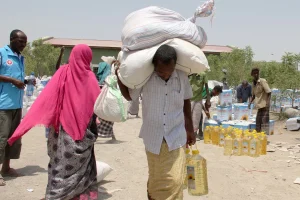 Our guide to giving in Ethiopia · all 3 causes
ለኢትዮጵያ በክሪፕቶ መለገስ፦ ለትምህርት፣ ለአመጋገብና ለውሃ
Read the guide and compare causes →
See all Water & Sanitation causes and how we choose them →
How your gift reaches this cause
- You send crypto to DonateCrypto’s verified wallet for the coin you choose. No platform fee is taken; blockchain network fees still apply.
- Your transaction ID ties the gift to this cause. Our team checks it on the blockchain and emails your official receipt once it’s confirmed.
- We then convert the funds for this cause and send them to WaterAid Ethiopia, the organization named above, by bank transfer to its registered bank account, within 24 hours of confirming your donation.
- Every cause is reviewed before it’s listed — see how we vet causes.
- DonateCrypto is a program of Global Relief Group, a US 501(c)(3) nonprofit, so gifts may be tax-deductible for US donors.