Community Solar Cooperative
Donate crypto to this environment & conservation cause in Malawi. We accept Bitcoin, Ethereum, USDT and six other coins, with no platform fee.
Funds shared solar micro-grids for villages currently reliant on charcoal and kerosene, reducing both deforestation pressure and household costs.
Why this matters in Malawi
Fewer than 7 percent of rural residents have access to electricity, and grid lines rarely reach scattered villages far from main roads. Households cook on firewood and charcoal and light their homes with kerosene, battery torches or small solar lanterns. Demand for wood fuel is a major driver of forest loss, and women and girls spend hours each week collecting it. Clinics without power struggle to store vaccines or attend births at night, and grain milling depends on diesel mills that can be far away and costly to use.
Extending the national grid to such villages is expensive and slow, while individual solar kits are beyond many family budgets and too small to run a mill or workshop. A shared mini-grid sits between the two: one solar array and battery bank serving homes, a health post, schools and small businesses. The harder part is keeping it running for years, which depends on fair fees, trained local technicians and a committee the village trusts.
What your gift pays for
- Solar panels, inverters and batteries for village mini-grids sized to serve homes and shared facilities
- Training for local technicians, including women, to operate and repair the system
- Household connections and wiring, with subsidized fees that families pay in installments
- Electric milling equipment that lets villages replace costly diesel-powered maize mills
Organization
Community Energy Malawi (CONREMA) · Malawi
Founded 2016 · Headquarters: Blantyre
Malawian NGO building community solar mini-grids for off-grid villages.
How they work: Community Energy Malawi treats the village as the owner of its power system and keeps an oversight role for itself. At Sitolo, a committee of about 40 people drawn from four villages, nearly half of them women, runs the mini-grid, and residents have been trained as technicians. Connection fees are subsidized and paid in installments, and the organization encourages productive uses such as solar milling, barbering and welding so that power generates local income.
Track record: With UNDP and government support it implemented an 80 kW solar mini-grid in Sitolo village, Mchinji, set to connect 150 homes plus churches and an under-five clinic (2019).
✓ Verified by our team on 28 October 2023
Giving in Malawi
Village-level self-reliance connects the Malawi causes. Community health workers, trained and paid a stipend by Partners In Health, handle diagnosis and referral in villages more than a day's walk from a clinic. Smallholder cooperatives share irrigation equipment, rural youth receive after-school agricultural training as an alternative to early labor, and shared solar micro-grids replace charcoal and kerosene, easing pressure on forests. Each cause pools resources at the community level in a largely rural, farming-based country.
4 causes are listed in Malawi, each with its own verified organization. $356,868 has been distributed to causes in Malawi since 2021.
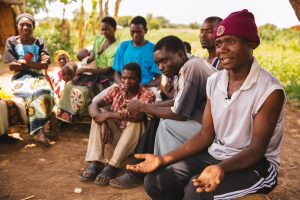 Our guide to giving in Malawi · all 4 causes
Donate Crypto to Malawi: 4 Verified Causes You Can Support
Read the guide and compare causes →
See all Environment & Conservation causes and how we choose them →
How your gift reaches this cause
- You send crypto to DonateCrypto’s verified wallet for the coin you choose. No platform fee is taken; blockchain network fees still apply.
- Your transaction ID ties the gift to this cause. Our team checks it on the blockchain and emails your official receipt once it’s confirmed.
- We then convert the funds for this cause and send them to Community Energy Malawi (CONREMA), the organization named above, by bank transfer to its registered bank account, within 24 hours of confirming your donation.
- Every cause is reviewed before it’s listed — see how we vet causes.
- DonateCrypto is a program of Global Relief Group, a US 501(c)(3) nonprofit, so gifts may be tax-deductible for US donors.